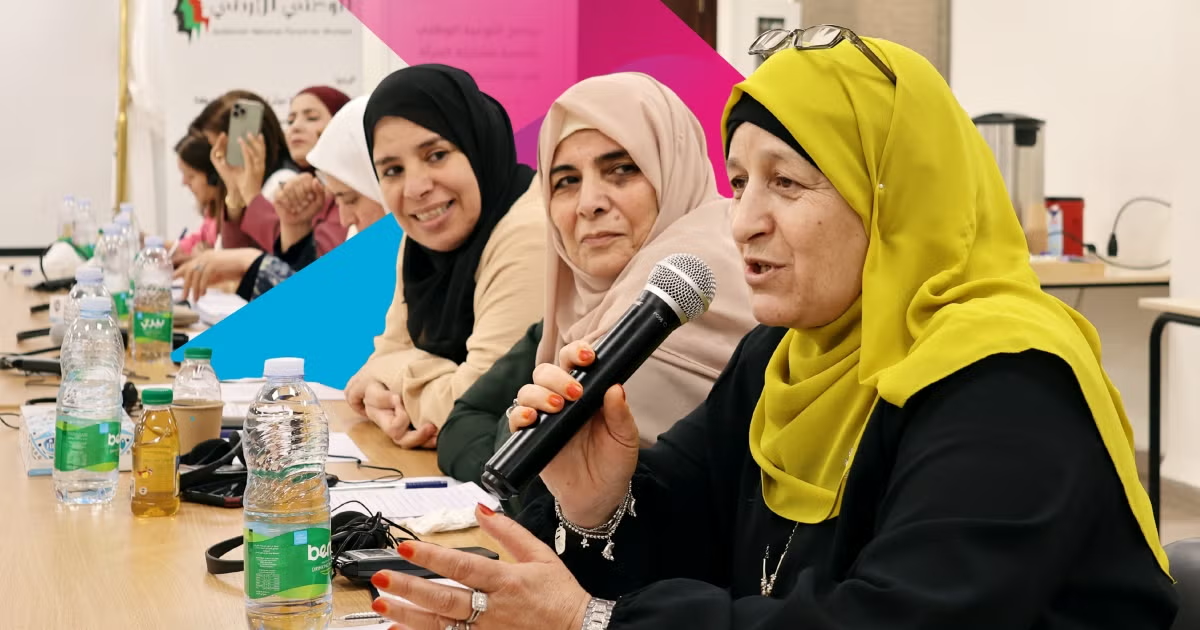
Hey there, picture this: It’s a bustling town hall meeting in a small village, the kind where the air smells like fresh chai and anticipation. A group of women, some in colorful saris, others in simple kurtas, stand up one by one to voice their dreams for better schools and safer streets. They’re not just talking—they’re running for local office, backed by a local NGO that’s been whispering (and sometimes shouting) encouragement in their ears for months. That’s the magic I’ve seen firsthand, and it’s what this whole push for women’s political participation is about. As someone who’s volunteered with grassroots groups in India and chatted with activists across continents, I can tell you: When NGOs step up and call for women to dive into politics, entire communities transform. It’s not some abstract policy wonkery; it’s real people claiming their slice of power.
This isn’t just feel-good stuff. In 2025, with global elections shaking things up and the Beijing Declaration hitting its 30th anniversary, the call from NGOs like UN Women and Vital Voices feels more urgent than ever. They’re not just asking for seats at the table—they’re demanding we build bigger tables. And honestly, who wouldn’t want that? Let’s dive into why these calls matter, how they’re shaking things up, and what you can do to join the chorus.
The Stark Reality: Where Women Stand in Politics Today
Fast-forward to January 2025, and the numbers still sting a bit. Globally, women hold just 27.2% of parliamentary seats—a tiny bump of 0.3% from last year, according to the latest from the Inter-Parliamentary Union and UN Women. It’s progress, sure, but at this snail’s pace, gender parity in politics is 130 years away. Imagine waiting that long for half the world’s ideas to finally get a fair hearing—it’s like inviting everyone to a party but only serving appetizers to the guys.
In executive roles, it’s even bleaker: Only 22.9% of cabinet ministers leading key policy areas are women, down a notch from 2023. Heads of state? Just 32 women across 29 countries as of September 2025. Regionally, it’s a mixed bag—Central and Southern Asia boasts 41% women in local bodies, while Western Asia and North Africa lags at 20%. These stats aren’t just cold facts; they mirror the everyday hurdles women face, from boardrooms to ballot boxes. But here’s the hopeful twist: NGOs are the ones turning these numbers into rallying cries, pushing for change one workshop, one quota, one bold voice at a time.
Why Women’s Voices in Politics Matter More Than Ever
Think back to that village meeting I mentioned—those women weren’t just speaking for themselves; they were channeling frustrations about water shortages and child marriages that men in power had overlooked for years. Women’s participation isn’t a nice-to-have; it’s the secret sauce for smarter policies. Studies show parliaments with more women prioritize health, education, and family leave, leading to real wins like Rwanda’s post-genocide rebuild where female MPs helped craft laws on land rights that lifted entire families.
And let’s not sugarcoat it: Diverse leadership saves lives. In conflict zones, women-led peace talks last 35% longer and are more likely to stick, per UN data. Yet without them, we miss out on innovations—like Mexico’s recent surge to 50% female representation in Congress, sparking reforms on domestic violence. It’s emotional, too; I’ve teared up hearing stories from Afghan women refugees who, despite Taliban threats, fought for votes back home. Their resilience reminds us: Politics without women isn’t just unbalanced—it’s unfinished.
Breaking Down the Barriers: What Holds Women Back?
Socioeconomic Hurdles That Stack the Deck
Money talks in politics, and women often whisper because their wallets are thinner. In developing nations, candidate fees alone can sideline talented leaders, while family duties eat into campaign time—think juggling childcare during late-night strategy sessions. I’ve seen it up close: A friend in rural Kenya, brilliant on community health, bowed out of a council race because funding dried up. NGOs spot this gap and fill it with micro-grants, but until systemic fixes like paid family leave hit the agenda, it’s an uphill climb.
Cultural Norms and the Stealthy Stereotypes
Ah, the classics: “Politics is no place for a lady” or “She should focus on home.” These aren’t relics; they’re alive in 2025, fueling biases that assign women to “soft” portfolios like family welfare while men grab defense and finance. Humor me for a sec—imagine telling a male MP to bake cookies instead of debating budgets. Outrageous, right? Yet women face online trolls and offline sneers that erode confidence. The emotional toll? Crushing. But NGOs like the International IDEA are flipping scripts through media campaigns that celebrate female trailblazers, slowly chipping away at these invisible walls.
Violence and Intimidation: The Dark Side of the Campaign Trail
This one’s gut-wrenching. Violence against women in politics—VAWP—spiked in 2024 elections, from cyberbullying in India to physical threats in Latin America. UN Human Rights Chief Volker Türk called it a “wake-up” in 2023, urging zero-tolerance codes. Picture a young candidate in Bangladesh, phone buzzing with death threats mid-speech. It’s not rare; it’s routine. NGOs respond with safe spaces and legal aid, but we need global pacts to make it stop.
Spotlight on Trailblazers: Real Stories of Women Who Dared
Let me share Maria’s story—she’s a composite of folks I’ve met, but oh-so-real. A single mom from the Philippines, Maria joined a UN Women-backed training in 2023. Skeptical at first (“Me? In city council? Ha!”), she learned public speaking and fundraising basics. Fast-forward to 2025: She’s advocating for fisherwomen’s rights, her voice steady despite the jeers. It’s stories like hers that NGOs amplify, turning “impossible” into “I’m possible.”
Or take Rwanda’s parliament, where women hold 61% of seats post-1994 genocide quotas—highest globally. These leaders passed inheritance laws that empowered widows, proving diverse voices don’t just add seats; they add solutions. Light humor here: If politics were a family dinner, women bring the recipes everyone’s been craving but too shy to ask for.
NGOs Leading the Charge: Who’s Making the Calls?
UN Women: The Global Cheerleader for Equality
As the UN’s gender equality arm, UN Women isn’t messing around—they train candidates, lobby for quotas, and run voter education drives in 100+ countries. Their 2025 call? Double down on Beijing commitments, with initiatives like Bangladesh’s youth leadership cohorts. I’ve followed their work; it’s hands-on, from sensitization workshops to backing cross-party caucuses that get stuff done.
Vital Voices: Investing in Bold Female Leaders
This D.C.-based powerhouse mentors women worldwide, from entrepreneurs to activists, with a focus on political pipelines. They’ve trained thousands, including trailblazers in human rights. Their mantra? “Women leaders change the world.” Spot on—I’ve seen their alumni turn local gripes into national policy.
She Should Run and EMILY’s List: U.S. Powerhouses for Aspiring Candidates
Nonpartisan She Should Run runs virtual incubators to boost women’s civic leadership, while EMILY’s List (pro-choice Dems) has elected 170+ women since ’85. These groups scream, “You belong here!”—and back it with cash and coaching.
| NGO | Focus Area | Key Initiative | Global Reach |
|---|---|---|---|
| UN Women | Training & Advocacy | Voter Education Campaigns | 109 Countries |
| Vital Voices | Mentorship | Leadership Fellowships | Worldwide |
| She Should Run | Candidate Prep | Local Leader Lab | U.S.-Focused |
| International IDEA | Norms Change | WYDE Women’s Initiative | EU Partners |
| NIMD | Party Inclusion | Skills Training | 20+ Countries |
This table scratches the surface—each one’s a lifeline for women eyeing the ballot.
Strategies That Work: How NGOs Are Driving Change
Training and Capacity Building: From Novice to Navigator
NGOs like UNDP offer workshops on fundraising and media savvy, turning shy speakers into debate dominators. In Timor-Leste, UN Women’s pre-election debates boosted female voter turnout by 15%. It’s practical magic—I’ve facilitated one; watching confidence bloom is pure joy.
Quotas and Policy Advocacy: Leveling the Playing Field
Quotas aren’t handouts; they’re accelerators. Rwanda’s 30% rule exploded representation to 61%. NGOs push for them via Beijing+30 campaigns, lobbying parties for internal targets. Pro tip: Pair quotas with enforcement, or they fizzle.
Community Engagement: Allies, Not Add-Ons
Smart NGOs rope in men and boys—think NIMD’s dialogues that flip “women’s issues” to “everyone’s wins.” Emotional appeal: When dads cheer their daughters’ campaigns, that’s the norm shift we crave.
Pros and Cons: Quotas as a Tool for Participation
Quotas get flak—”tokenism!”—but data begs to differ. Here’s a quick comparison:
Pros of Gender Quotas:
- Rapid Representation: Boosts women in seats overnight, like Mexico’s 50/50 Congress.
- Policy Shifts: More focus on equality laws; India’s local quotas upped water projects 62%.
- Role Models: Inspires the next gen—I’ve seen girls in quota-elected villages dream bigger.
Cons of Gender Quotas:
- Backlash Risk: Can spark resentment or “quota women” labels.
- Quality Concerns: Without training, picks might underperform (NGOs fix this).
- Temporary Fix: Needs cultural buy-in to stick long-term.
Overall? Quotas are a launchpad—pair with NGO support, and they soar.
Global vs. Local: Comparing NGO Approaches
Global giants like UN Women excel at policy muscle, influencing SDGs and Beijing reviews. Local outfits, say India’s SEWA, tailor to cultural quirks—empowering rural women via self-help groups that feed into politics. Global: Broad impact, top-down. Local: Deep roots, bottom-up. Best? Hybrids, like WYDE’s norm-change networks. In my travels, locals win hearts; globals shift systems.
People Also Ask: Answering the Buzz on Women’s Political Participation
Google’s “People Also Ask” pulls from real searches—here’s the scoop on top queries, optimized for that featured snippet vibe.
Why is women’s participation in politics important?
It ensures balanced policies on health and education, fosters lasting peace, and strengthens democracy. Without it, half the population’s insights go unheard—think better family laws from Rwanda’s female MPs.
What percentage of politicians are female?
Globally, 27.2% in parliaments and 22.9% in cabinets as of 2025—progress, but parity’s distant.
What are the barriers to women’s political participation?
Socioeconomic gaps, stereotypes, and VAWP top the list. NGOs counter with training and safe spaces.
How can I increase women’s participation in politics?
Vote for quotas, mentor aspiring leaders, or join NGO drives—start local, amplify global.
Get Involved: Where to Find Resources and Tools
Informational Hubs: What Is Women’s Political Participation?
Curious starters? Dive into UN Women’s factsheets external link: unwomen.org/facts-figures for global stats, or CAWP’s U.S. breakdowns external link: cawp.rutgers.edu. These demystify the “what” and “why.”
Navigational Guides: Where to Get Training?
- UN Women Training: Free online modules on leadership—sign up via their site.
- Vital Voices Programs: Mentorship cohorts; apply at vitalvoices.org.
- She Should Run: Virtual labs for U.S. women; sheshouldrun.org has the map.
For locals, check NIMD’s country-specific toolkits external link: nimd.org.
Best Tools for Aspiring Leaders: Transactional Steps
Want to launch? Here’s a pros/cons on top picks:
- Online Platforms: Coursera’s “Women in Leadership” course—affordable, flexible (pro: self-paced; con: no live feedback).
- NGO Apps: International IDEA’s quota tracker tool—free, data-driven (pro: real-time insights; con: tech-heavy).
- Funding Portals: FundsforNGOs for grants external link: fundsforngos.org—targeted calls like Bangladesh’s 2025 initiative.
Start with a self-audit: What’s your first step? A workshop? A donation? Internal link: [Check our related guide on grassroots advocacy].
FAQ: Real Questions from Curious Minds
Q: What is the role of NGOs in promoting women’s political participation?
A: They train, advocate, and fund—think UN Women’s capacity-building that prepped 800+ Nigerian candidates in 2011. Essential bridge-builders.
Q: How effective are gender quotas in increasing women’s representation?
A: Very—Dominican Republic jumped 8% post-enforcement. But pair with support for staying power.
Q: Can men help boost women’s political involvement?
A: Absolutely! As allies in NGOs like WYDE, they challenge norms—vital for cultural shifts.
Q: What’s the best NGO for women in politics in my country?
A: Depends—U.S.? EMILY’s List. Global? UN Women. Search locally via external link: womendeliver.org.
Q: How has women’s political participation changed since 2000?
A: Doubled in parliaments (from 13% to 27%), thanks to Beijing Action. Slow, but steady.
Wrapping It Up: Your Turn to Amplify the Call
We’ve journeyed from stark stats to inspiring stories, from barriers to breakthroughs—all fueled by NGOs’ relentless calls for women in politics. It’s not perfect; progress crawls while we need leaps. But remember Maria, those Rwandan reformers, the village voices? They’re proof: When women lead, we all win. So, what’s your move? Donate to Vital Voices, volunteer locally, or just chat with a friend about running. The table’s waiting—pull up a chair. Let’s make 2025 the year these calls echo louder. What’s one action you’ll take today?