Political parties are the backbone of modern democratic systems, shaping how we vote, govern, and debate. But why do we need them? Can’t we just vote for individuals based on their ideas? This article explores the critical role political parties play, their benefits and drawbacks, and why they remain essential despite their flaws. Drawing from history, personal observations, and real-world examples, we’ll unpack this topic with clarity and a touch of humor—because politics doesn’t have to be a snooze fest.
What Are Political Parties?
Political parties are organized groups of people with shared ideologies, goals, and values who work together to influence government policies and win elections. They act as a bridge between citizens and governance, simplifying complex political landscapes into digestible platforms. Think of them as teams in a never-ending political Super Bowl, each vying for control of the playbook.
The Core Functions of Political Parties
Parties streamline democracy by providing structure and clarity. They recruit candidates, craft policy platforms, and mobilize voters. Without them, elections would feel like a chaotic free-for-all, with voters drowning in a sea of independent candidates and conflicting ideas.
Simplifying Choices for Voters
Imagine walking into a voting booth with 50 candidates, each with their own manifesto. Overwhelming, right? Parties narrow down the options, offering voters a shorthand for aligning with candidates who share their values. This saves time and mental energy, making participation more accessible.
Organizing Governance
Once elected, parties help structure government operations. They coordinate legislative agendas, assign committee roles, and ensure cohesive policymaking. Without parties, lawmakers might struggle to align on priorities, leading to gridlock or inconsistent policies.
The Historical Roots of Political Parties
Political parties didn’t just appear out of thin air—they evolved to meet the needs of growing democracies. In the U.S., for example, the Federalists and Anti-Federalists emerged in the late 18th century to debate the Constitution’s scope. These early factions laid the groundwork for today’s party system, proving that even founding fathers needed a team to get things done.
Why Parties Became Essential
As democracies expanded, so did the need for organization. Parties became the glue holding diverse voter interests together, channeling them into actionable policies. They also provided stability, ensuring that governance didn’t collapse with every election cycle.
A Personal Anecdote: My First Election
I remember my first time voting in a local election. I walked in, ballot in hand, expecting to pick the “best” candidate. Instead, I was overwhelmed by names I barely recognized. The party affiliations next to each name gave me a starting point, a way to anchor my choices in values I cared about, like education and healthcare. That moment showed me why parties matter—they’re like a GPS for navigating the political maze.
The Pros and Cons of Political Parties
Like anything, political parties have their upsides and downsides. Let’s break them down to see why they’re both a blessing and, sometimes, a headache.
Pros of Political Parties
Parties bring order to chaos, amplify voices, and drive progress. Here’s how:
- Voter Guidance: They simplify complex issues into platforms, helping voters make informed choices.
- Policy Cohesion: Parties align lawmakers to push consistent agendas, reducing legislative chaos.
- Mobilization: They energize voters through rallies, campaigns, and grassroots efforts.
- Accountability: Parties hold elected officials accountable to shared goals, preventing rogue policymaking.
Cons of Political Parties
But it’s not all sunshine and rainbows. Parties can also create division and stifle individuality:
- Polarization: Parties can deepen divides, turning politics into an “us vs. them” battle.
- Groupthink: Candidates may toe the party line instead of thinking independently.
- Power Concentration: Party elites can dominate decision-making, sidelining grassroots voices.
- Voter Apathy: Some feel forced to choose between “lesser evils,” leading to disengagement.
A Balanced View
While parties streamline democracy, they can also feel like gatekeepers. I once met a local candidate who ran as an independent because he felt stifled by party loyalty. He had great ideas but struggled to gain traction without a party’s backing. This tension highlights the trade-off: parties provide structure but can limit innovation.
How Political Parties Shape Democracy
Parties don’t just organize elections—they shape how democracy functions. From campaign strategies to policy debates, their influence is undeniable.
Streamlining Elections
Parties reduce the chaos of elections by vetting candidates and presenting clear platforms. This ensures voters aren’t sifting through hundreds of independents, each with their own agenda.
The Role of Primaries
Primaries, where parties select their candidates, are a key example. They narrow the field, ensuring only viable contenders reach the general election. This process, while imperfect, keeps elections manageable.
Influencing Policy
Once in power, parties drive legislative priorities. In the UK, for instance, the Labour Party’s push for the National Health Service in the 1940s transformed healthcare access. Parties turn ideas into reality by rallying support and resources.
Case Study: The New Deal
In the 1930s, the Democratic Party in the U.S. championed Franklin D. Roosevelt’s New Deal, a series of programs to combat the Great Depression. Without party unity, passing such sweeping reforms would’ve been nearly impossible. This shows how parties can turn vision into action.
Fostering Civic Engagement
Parties don’t just operate during elections—they engage communities year-round. From town halls to volunteer drives, they encourage citizens to get involved, making democracy more participatory.
A Touch of Humor
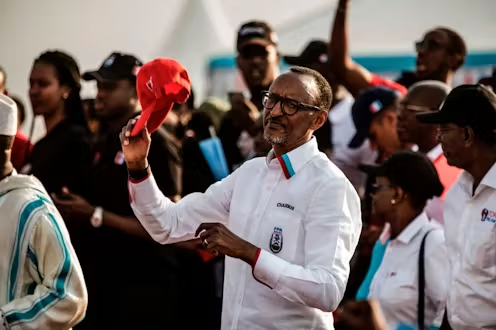
Let’s be real: party rallies can feel like a mix of pep rally and soap opera. But that energy—those signs, speeches, and occasional drama—gets people talking about issues. And isn’t that the point of democracy?
Comparing Party Systems Around the World
Not all party systems are created equal. Let’s compare two common models: two-party and multi-party systems.
| Feature | Two-Party System (e.g., U.S.) | Multi-Party System (e.g., Germany) |
|---|---|---|
| Number of Parties | Dominated by two major parties | Multiple parties with influence |
| Voter Choice | Limited to two main options | Broader range of ideologies |
| Stability | More predictable governance | Coalition-based, can be less stable |
| Representation | May exclude minority views | Better represents diverse groups |
Two-Party Systems
The U.S.’s Democratic and Republican parties dominate, creating stability but limiting choice. Voters often feel stuck choosing the “lesser evil.”
Why It Works
Two-party systems streamline decision-making and reduce fragmentation. They’re like choosing between pizza or burgers—simple, but not always satisfying.
Multi-Party Systems
Countries like Germany have multiple parties, from the Greens to the Christian Democrats. This diversity reflects varied voter priorities but can lead to coalition gridlock.
Why It’s Challenging
Multi-party systems offer more choice but require compromise. Imagine trying to plan a group dinner where everyone wants something different—it’s messy but inclusive.
People Also Ask (PAA)
Here are answers to common Google questions about political parties, optimized for featured snippets.
What Is the Main Purpose of a Political Party?
The main purpose of a political party is to organize voters, candidates, and policies to influence government and win elections. They simplify voter choices and drive cohesive policymaking.
Why Don’t We Just Vote for Individuals?
Voting for individuals without parties would overwhelm voters with too many choices and lead to disorganized governance. Parties provide structure and alignment for effective democracy.
Are Political Parties Necessary for Democracy?
While not mandatory, political parties are essential for simplifying elections, coordinating policies, and mobilizing voters. Without them, democracy would be chaotic and fragmented.
How Do Political Parties Affect Voters?
Parties guide voters by offering clear platforms, mobilizing communities, and shaping policy debates. However, they can also polarize opinions and limit independent voices.
Where to Learn More About Political Parties
Want to dive deeper? Here are some navigational resources:
- Official Party Websites: Check platforms like democrats.org or gop.com for U.S. party agendas.
- Government Resources: Sites like usa.gov explain party roles in elections.
- Educational Platforms: Khan Academy offers free courses on political systems.
Best Tools for Understanding Political Parties
For those eager to explore, here are transactional tools to stay informed:
- VoteSmart: Tracks candidate and party positions (votesmart.org).
- PolitiFact: Fact-checks party claims for accuracy (politifact.com).
- Ballotpedia: A comprehensive resource for party and election data (ballotpedia.org).
FAQ: Common Questions About Political Parties
Why do political parties exist?
Political parties exist to organize voters, streamline elections, and promote cohesive policies. They simplify complex political choices and ensure governance stability.
Can a democracy function without political parties?
Yes, but it’s challenging. Without parties, voters face information overload, and governance lacks structure, leading to inefficiency and fragmentation.
How do political parties influence elections?
Parties influence elections by selecting candidates, crafting platforms, and mobilizing voters through campaigns, ads, and grassroots efforts.
What are the disadvantages of political parties?
Parties can foster polarization, suppress independent voices, and prioritize power over principle, sometimes alienating voters.
How can I get involved with a political party?
Join local party chapters, attend rallies, or volunteer for campaigns. Check official party websites for opportunities to engage.
Wrapping Up: The Enduring Need for Political Parties
Political parties are like the scaffolding of democracy—imperfect but essential. They simplify choices, organize governance, and give voters a voice, even if they sometimes feel like a necessary evil. My own journey from a confused first-time voter to someone who appreciates their role (warts and all) shows their value. They’re not perfect, but without them, democracy would be like herding cats—chaotic and exhausting. So, next time you roll your eyes at a campaign ad, remember: parties are the glue keeping the system together.