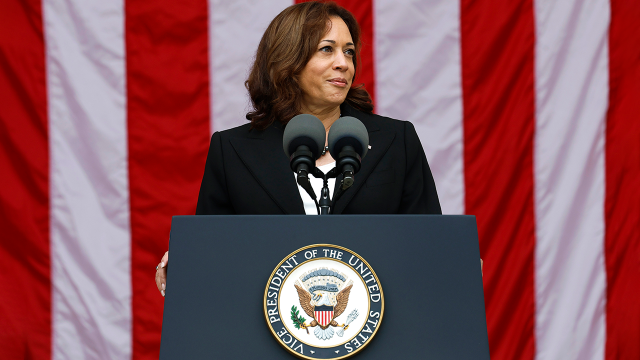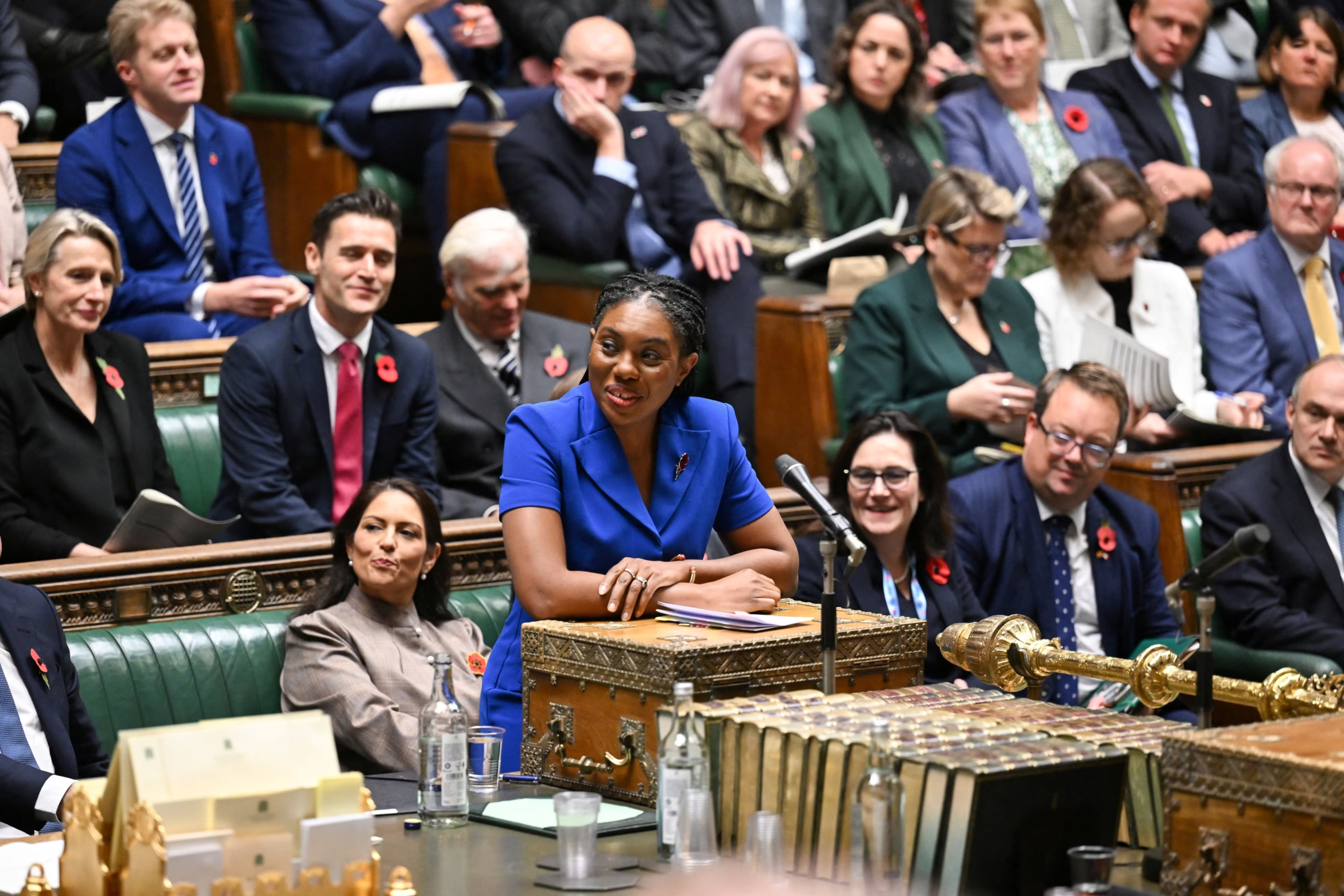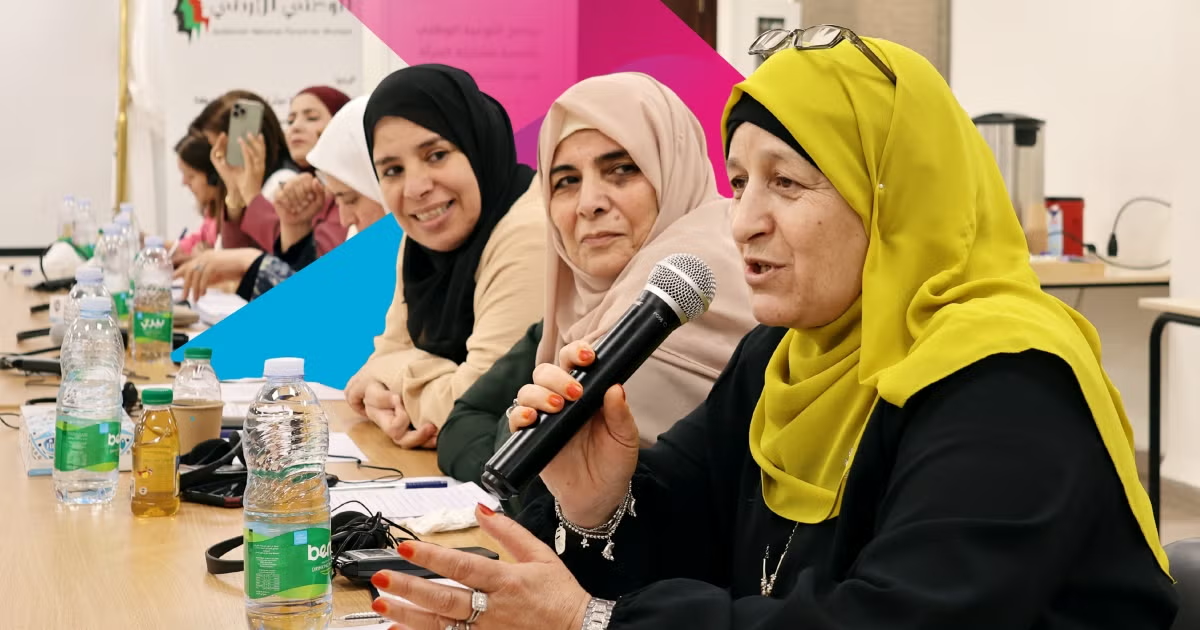
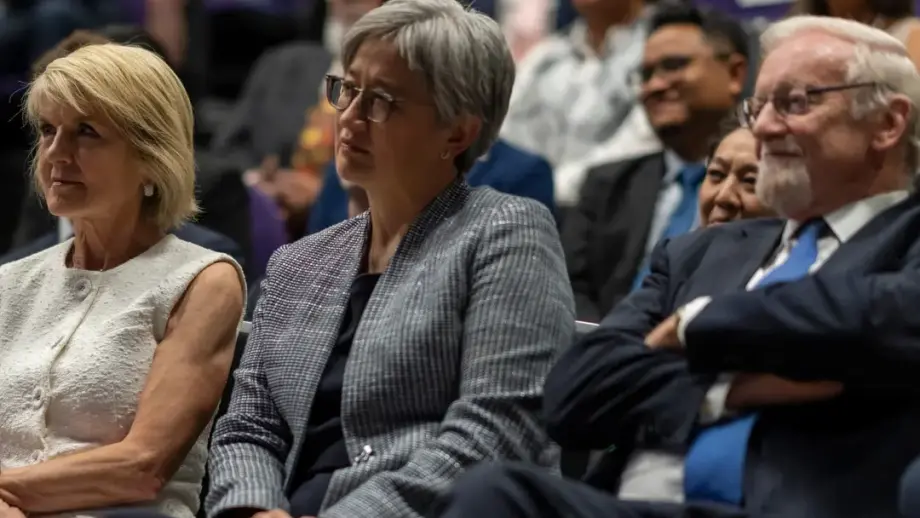
Hey there. Picture this: It’s 2025, and I’m scrolling through my feed on a quiet Tuesday morning, coffee in hand, when I stumble on a headline about the latest UN Women report. Women hold just 27.2% of parliamentary seats worldwide—barely a blip up from last year. I set my mug down a little harder than intended. As someone who’s spent years volunteering on local campaigns and even toyed with the idea of running for city council myself (spoiler: family life won that round), it hits close to home. Why, after all the marches, the quotas, the viral moments of trailblazers like Kamala Harris or Jacinda Ardern, do we still have this stubborn gap? It’s not just numbers; it’s about whose voices shape our laws, our budgets, our future. Let’s unpack this together, like we’re chatting over that coffee—because understanding the “why” is the first step to flipping the script.
The Stark Reality: Global Statistics on Women’s Political Representation
Fast forward to January 2025, and the Inter-Parliamentary Union (IPU) and UN Women’s annual map paints a picture that’s equal parts progress and frustration. Women are Heads of State or Government in only 25 countries, down slightly from the year before, and they make up less than a quarter of cabinet ministers globally. It’s a snapshot that shows incremental gains in parliaments but a backslide in executive roles, where men outnumber women by more than three to one. These figures aren’t abstract—they mean decisions on everything from climate policy to healthcare often lack the diverse lens half the population brings.
This underrepresentation isn’t uniform; it’s a patchwork of regional highs and lows. In Rwanda, women hold over 61% of parliamentary seats, a beacon thanks to post-genocide quotas. But in places like the Pacific Islands or Central Asia, it’s hovering around 10%. And in the U.S., where I call home, women are just 28% of Congress—better than the global average but still worlds away from parity. It’s a reminder that while we’ve come far since the suffrage fights of the early 1900s, the road to equality feels like it’s got more detours than a cross-country drive.
Historical Roots: How We Got Here
Let’s rewind a bit, shall we? Back in 1920, American women finally got the vote with the 19th Amendment, a victory hard-won by suffragettes who faced arrests and ridicule. But voting rights were just the opening act. For decades, laws and norms kept women out of the real power seats—think “a woman’s place is in the home” etched into everything from schoolbooks to campaign ads. Globally, it was no different; in Switzerland, women couldn’t vote until 1971, and even then, some rural cantons dragged their feet into the ’90s.
These roots run deep, shaping institutions that still tilt male. Early political parties were boys’ clubs, recruiting from cigar-filled backrooms where women simply weren’t invited. By the mid-20th century, as more women entered the workforce post-WWII, cracks appeared—figures like Margaret Chase Smith in the U.S. Senate or Indira Gandhi in India broke barriers. Yet history’s echo lingers: Underrepresentation today is the grandchild of those exclusions, amplified by slow cultural shifts. It’s why, even now, a woman running for office often feels like she’s auditioning for a role the script never wrote for her.
Colonial Legacies and Global Variations
Colonialism added another layer, exporting patriarchal structures to colonies where local customs sometimes clashed but rarely overrode them. In Africa and Asia, independence movements often sidelined women’s contributions, leading to post-colonial governments that mirrored the imbalances. Take India: While the constitution promised equality, women’s parliamentary share languished below 15% until quotas in local bodies kicked in during the ’90s, boosting grassroots involvement.
Contrast that with Nordic countries, where social democratic policies from the mid-20th century emphasized gender equity early on. Sweden’s voluntary party quotas in the 1970s propelled women to 47% of parliament by 2025. These variations show history isn’t destiny—it’s a starting line we can reroute.
Societal and Cultural Barriers Holding Women Back
Society’s unwritten rules are sneaky culprits. From childhood, we’re fed narratives: Boys lead, girls nurture. It’s the “double bind” researchers talk about—women leaders must be tough but not too tough, caring but not weak. I remember interviewing a state senator last year; she laughed wryly about being called “bossy” in debates while her male counterpart got “assertive” for the same fire. It’s exhausting, and it starts early, discouraging girls from even dreaming of the podium.
Cultural norms tie women to unpaid care work—childcare, eldercare—that devours time and energy. In low-income households, this “time poverty” hits hardest, turning political ambition into a luxury. Add poverty’s disproportionate bite on women, and you’ve got a recipe for exclusion. Stereotypes paint politics as a combative arena suited for “masculine” traits, sidelining women’s collaborative strengths. It’s not that women lack grit; it’s that the game feels rigged from the jump.
The Weight of Family Responsibilities
Think about it: A typical campaign trail means late nights, travel, fundraisers. For women juggling primary caregiving—stats show they do 2-10 times more than men—it’s a non-starter. One study found working moms are 20% less likely to run due to this “ambition gap.” My friend Lisa, a single mom and community organizer, once confided she’d skip a local race because “who’d handle bedtime stories?” It’s relatable, heartbreaking, and fixable with better support like subsidized childcare.
Structural Hurdles in the Political Pipeline
Structures are the invisible walls. Electoral systems matter hugely—winner-take-all setups like the U.S. favor incumbents (mostly men), while proportional representation in Europe allows more women to sneak in via party lists. Party gatekeepers, often older men, recruit from their networks, overlooking diverse talent. Funding? Women candidates raise 20-30% less on average, per recent FEC data, because donors stick to familiar faces.
Then there’s the pipeline myth: The idea that women just need more experience. But look at corporate boards or academia—underrepresentation persists at every rung. It’s not a leak; it’s a design flaw. Reforms like ranked-choice voting could level the field, but inertia keeps the status quo humming along.
Financial Barriers and Campaign Costs
Money talks, and women often whisper. Campaigns cost a fortune—$10 million for a House seat in 2024 cycles—and women start with less personal wealth or donor ties. A 2025 World Economic Forum report notes economic instability hits women hardest, shrinking their safety nets. EMILY’s List, a PAC boosting Democratic women, has funneled millions since 1985, but gaps remain. Imagine if we had public financing; it could turn “I can’t afford to lose” into “I can afford to run.”
Violence and Harassment: The Silent Deterrent
This one’s gut-wrenching. Political violence against women isn’t rare—it’s rampant. UN Women reports a surge in online harassment, with 85% of female MPs facing abuse versus 72% of men. In India, acid attacks on candidates; in Latin America, assassinations. It’s not just scary; it’s strategic, silencing voices on gender issues.
I teared up reading about María Elena Moyano in Peru, killed in 1992 for her activism. Today, digital trolls amplify it, doxxing and deepfaking to scare women off. Laws lag, but groups like the #WeHaveHerBack campaign are pushing back. Humor in the face of horror? One Kenyan MP quipped, “They attack because they fear our power.” Damn right.
Economic Factors: The Cost of Entry
Economics isn’t sexy, but it’s pivotal. Women earn 77 cents to a man’s dollar globally, per 2025 ILO data, limiting savings for self-funded bids. In developing nations, poverty traps women in survival mode, far from ballot access. Even in wealthy spots, the “wealth gap” means fewer female philanthropists seeding PACs.
It’s a vicious cycle: Underrepresentation means fewer policies tackling wage inequality, perpetuating the barrier. Breaking it requires targeted grants, like those from the Cartier Women’s Initiative, but scaled up.
Intersectionality: When Race, Class, and Gender Collide
Not all women face the same walls. Women of color? Triple jeopardy. Black women in U.S. Congress rose to 10% of female reps in 2025, but that’s from a tiny base. Indigenous women in Australia or Latin America fight colonial remnants plus sexism. Class adds: Working-class women lack the networks affluent ones have.
A 2023 study showed intersectional barriers slash ambition—Black women cited racism as a bigger deterrent than sexism alone. It’s why Higher Heights Media focuses on Black female candidates; their 2024 endorsements doubled wins. Relatability? My Latina colleague shared how voters assumed she was “the diversity pick,” not the policy whiz. Ouch.
| Factor | Impact on White Women | Impact on Women of Color | Example |
|---|---|---|---|
| Voter Bias | Moderate; stereotypes on competence | High; added racial distrust | Black candidates face 15% lower turnout support |
| Funding Access | Good via established networks | Limited; fewer donor ties | Latinas raise 25% less than white female peers |
| Violence Risk | Online harassment common | Physical threats elevated | Indigenous MPs in Canada report 2x assaults |
| Policy Focus | Gender issues prioritized | Intersectional gaps ignored | AAPI women overlooked in health policy debates |
This table highlights how layers compound—addressing one without the others misses the mark.
Pros and Cons of Gender Quotas: A Comparison
Quotas are hotly debated—fast-track to parity or tokenism? They’ve worked wonders in places like Argentina (50% parliamentary women) but flop without enforcement.
Pros of Quotas:
- Rapid boost: Rwanda jumped from 36% to 61% post-2003.
- Policy wins: More focus on childcare, violence prevention.
- Role models: Inspires girls, normalizes women leaders.
Cons of Quotas:
- Backlash: “Affirmative action” stigma undermines legitimacy.
- Quality concerns: Rushed picks may lack experience.
- Temporary fix: Without cultural shifts, gains erode.
Compared to organic growth (slow but sustainable, like in Sweden), quotas are a sprint versus a marathon. Hybrid approaches—quotas plus training—seem the sweet spot.
People Also Ask: Common Questions on Women’s Underrepresentation
Drawing from real Google searches, here’s what folks are pondering. These snippets answer the intent behind “why underrepresented” with quick, snippet-friendly facts.
What percentage of politicians are female worldwide?
As of 2025, women hold 27.2% of parliamentary seats globally, per UN Women—up 0.3% from 2024 but still far from 50%. In executives, it’s a dismal 22.9%.
Why is there a gender gap in politics?
The gap stems from supply-side issues (women’s lower candidacy rates due to family duties) and demand-side biases (voters and parties favoring men). Add violence and funding hurdles, and it’s a perfect storm.
How can we increase women’s representation in politics?
Start local: Run for school board. Push quotas, fund campaigns via PACs like EMILY’s List, and educate on biases. Training programs build skills and confidence.
Which countries have the most women in politics?
Rwanda leads with 61%, followed by Cuba (55%) and Nicaragua (55%). Nordic nations like Sweden (47%) shine via party parity pledges.
Does women’s underrepresentation affect policy?
Absolutely—fewer women means gaps in family leave, reproductive rights, and poverty alleviation. Studies show diverse parliaments pass more equitable laws.
Pathways Forward: Breaking the Cycle
Hope isn’t lost; it’s in the doing. Start by amplifying women—volunteer for a candidate, join a caucus. Policymakers: Enforce quotas, fund anti-violence measures. Parties: Diversify recruitment. Individually? If you’re a woman eyeing office, know this: Your story matters. I finally ran for PTA president last year—small stakes, huge lesson in voice.
Best tools for aspiring women? Check EMILY’s List for fundraising bootcamps or She Should Run for free webinars. For deeper dives, UN Women’s toolkit offers global strategies. Where to get started locally? Your city clerk’s office lists openings—navigational gold.
Emotional nudge: Imagine a world where policies reflect all of us. That’s not a dream; it’s doable. Let’s build it, one vote, one voice at a time.
FAQ: Your Burning Questions Answered
What is the main reason for women’s underrepresentation in politics?
It’s multifaceted, but societal norms and biases top the list—women face a “double bind” of expectations, plus barriers like childcare and funding. At 27.2% globally, we’re seeing slow change, but urgency is key.
How does underrepresentation impact democracy?
It skews policies away from women’s priorities, like healthcare and equality, eroding trust. Diverse leadership yields better outcomes—think 20% more spending on social services with more women MPs.
What are the best resources for women entering politics in 2025?
Top picks: CAWP’s Definitive Guide for U.S. tips; UN Women’s leadership programs globally. Transactional? VoteRunLead’s free trainings turn intent into action.
Why do quotas work in some countries but not others?
Enforcement matters—Rwanda’s constitutional mandates succeeded, while voluntary ones falter. Pair with education to combat backlash.
Can social media help close the gender gap in politics?
Yes! It amplifies voices but beware harassment. Campaigns like #SheMentors use it for networking—join to connect with mentors.